Physical AtoN
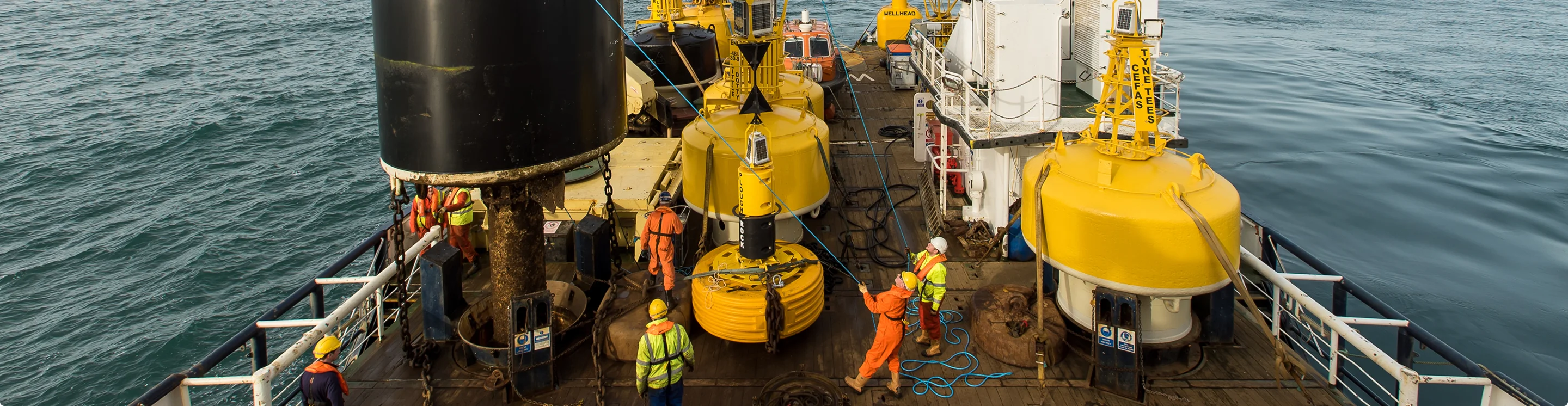
Physical aids to navigation (AtoN) remain essential to maritime safety, with lighthouses, beacons, buoys and other visual systems forming the backbone of navigation across UK and Irish waters.
At GRAD, we conduct research into different aspects of buoys, lighthouses and other AtoN. This includes the visual signal and options to generate it, test it and understand how flash characters are observed and used, both by mariners and future machine systems.
GRAD has successfully developed LED light sources that have been deployed internationally, providing significant visible range at a much-reduced power, allowing authorities to remove generators and simplify installations. This leads to reductions in emissions, breakdowns and the number of site visits.
Our work focuses on supporting the operation of today’s physical infrastructure while identifying opportunities to enhance and reinforce established systems. This includes evaluating emerging technologies that can improve performance, reduce operational costs, and lower environmental impact.

GRAD maintains a lights laboratory and two light ranges on which to measure lighthouse and buoy lanterns. These facilities support our research and development activities and allow us to test and ensure visual signals deployed across the GLAs are fit for purpose. GRAD operates a unique facility to measure the light produced by lighthouses using techniques honed over decades of development.

